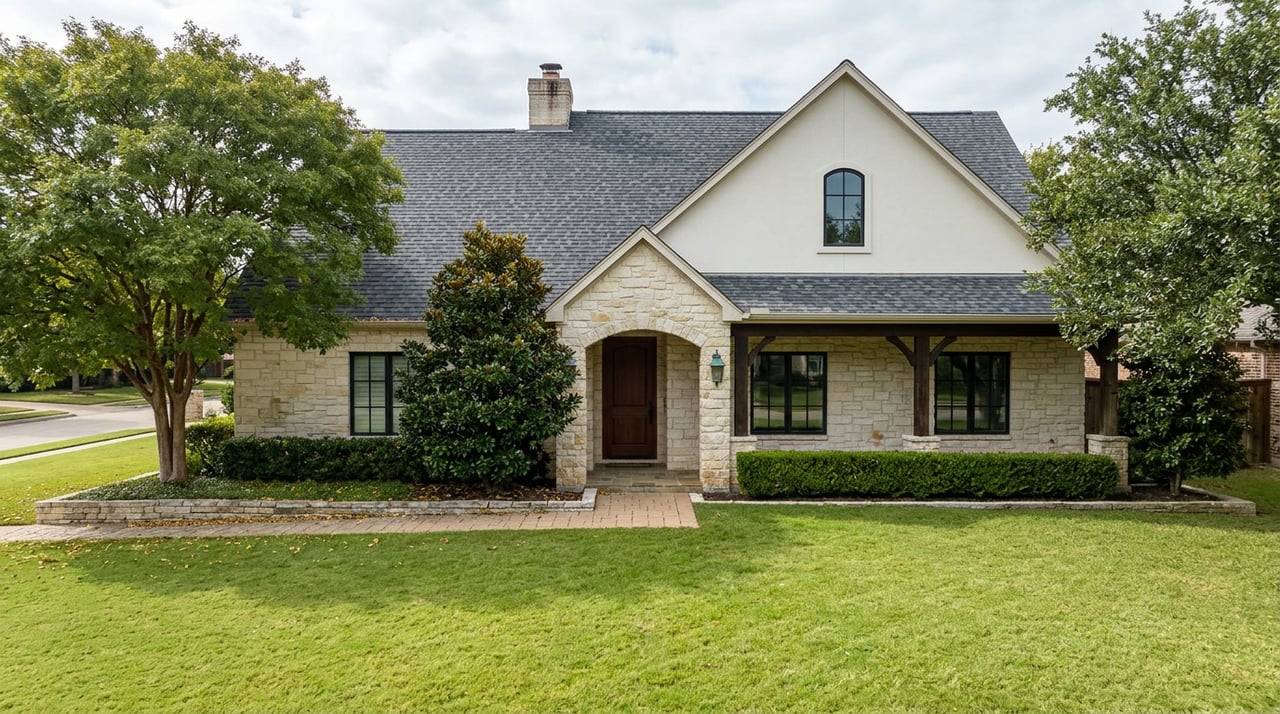
A buyer under contract on a new build in Trinity Falls this fall will get a closing disclosure that says McKinney, Texas. The mailing address says McKinney. The listing said McKinney. What it will not say, anywhere on that paperwork, is that the City of McKinney's own tax office does not consider the property to be inside the city at all.
That's not a technicality buried in a title report. It's stated plainly on the city's tax information page: Trinity Falls falls within McKinney Municipal Utility District No. 1, a legally separate taxing entity from the City of McKinney itself. The home is inside the city's extraterritorial jurisdiction, the buffer zone cities use to plan for future growth, not inside the city limits. And that single fact changes what a buyer actually pays every year, who shows up when they call 911, and what happens if a new tax gets layered on top of an old one, which is exactly what's playing out in Trinity Falls right now.
The number every buyer already has
Anyone shopping in McKinney has seen the headline figure. Over the three months ending July 2026, the median sale price for a McKinney home ran around $511,000, or roughly $205 per square foot, both down slightly from the same period a year earlier. That number gets used the same way across every neighborhood in the city, from a resale bungalow near the historic square to a new build going up in a MUD. It tells you almost nothing about what two buyers at the same price point will actually pay to own the home once the mortgage clears escrow.
That's the gap this post is built to close.
What a MUD actually does, and why McKinney has two of them
Trinity Falls sits across two municipal utility districts, McKinney MUD 1 and McKinney MUD 2, both created to fund the water lines, sewer systems, drainage, roads, and even fire protection infrastructure for a community that was raw land before a developer and the city struck a deal. MUD 1 covers an area of roughly 876 acres about five miles north of downtown McKinney. Together, the two districts were sized for a community originally planned around 4,200 homes across roughly 1,700 acres at full build-out.
The mechanism is straightforward. Instead of the city fronting the cost of that infrastructure and spreading it across every existing McKinney taxpayer, the district issues bonds, and the people who move into the district repay those bonds through their own property tax bill. The district's board is made up of Trinity Falls residents, elected by other Trinity Falls residents, and that board sets a tax rate every year based on debt service and operating costs.
For 2025, MUD 1 adopted a rate of $0.9847 per $100 of assessed value, split between maintenance and operations, water and sewer debt service, and road debt service. MUD 2 has held its rate at $1.05 per $100 since 2019. Both of those numbers sit on top of county and school taxes. Neither includes a city tax line, because there isn't one. The district exists specifically because the property isn't inside city limits, and it will keep existing until the day McKinney annexes Trinity Falls into its corporate boundaries.
The same city, a very different tax stack
Compare that to Craig Ranch, a master-planned community on the other side of McKinney. The combined city, county, and school rate lands closer to $1.67 per $100 of valuation, all flowing to entities that were already established before the neighborhood existed. A buyer there is paying into the same city government, the same fire department, the same police force that serves the rest of McKinney.
Two homes priced identically under the McKinney name can carry meaningfully different tax math depending on which side of that line they sit on, and the listing itself won't tell you which side you're on. You have to know to ask.
Craig Ranch sits close to the McKinney and Frisco border.
The fire fee, and the double taxation problem nobody saw coming
Here's where the MUD structure gets more complicated than a rate table can show, and where the story is still unfolding as of this fall.
Trinity Falls doesn't have its own fire department. Fire coverage comes from the City of McKinney's Fire Station 10, built in the district under a development agreement between the city and the developer, with MUD 1 reimbursing a share of the construction cost.
This past summer, a new emergency services district began levying its own tax on properties inside the MUD. MUD 1's board has described the concern as a double taxation issue, and as of late August 2026 it hadn't been resolved.
None of this makes Trinity Falls a bad place to buy. It makes it a place where the tax bill is genuinely more complicated to predict than a single line item on a listing sheet, and where that complexity is actively being negotiated by a small elected board whose meetings are open to the public and posted online.
A home marketed as McKinney can sit entirely outside McKinney's own tax jurisdiction, with its own government answering questions the city can't.
What to actually ask before comparing two payments
If you're weighing two homes that both say McKinney on the listing, the sale price is the least useful number for comparing true monthly cost. Before you run the math, find out:
- Is the property inside a MUD, a PID, or neither, and which specific district
- What is the current district tax rate, and has it been rising or falling over the past few years
- Whether the district's bonds are still being repaid, since MUD rates typically decline as more homes get built and the debt spreads across more rooftops, but only once construction slows down
- Which fire department and police department actually respond to that address, and whether that coverage runs through the city directly or through a fee arrangement
- Which school district the specific lot zones to, since boundaries inside a single named community can split between two ISDs
Every one of those answers is public record. County appraisal district sites list the taxing entities attached to a parcel. District websites post their adopted rates and board minutes. None of it requires taking the builder's financing sheet at face value.
FAQ
Is Trinity Falls actually part of the City of McKinney? Not in the way most buyers assume. The property sits in the city's extraterritorial jurisdiction and is served by its own municipal utility districts rather than the city's general tax rolls, according to the city's own tax information page. The district is designed to eventually be annexed into the city, but that hasn't happened yet.
Does the MUD tax rate ever drop? It can. Rates typically decline as a district finishes building out and its bond debt gets spread across more homes, or as bonds get refinanced at better terms. MUD 2's rate has stayed flat since 2019, which shows that decline isn't automatic or guaranteed on any particular timeline.
How does Craig Ranch compare with Trinity Falls? Craig Ranch is a comparably sized master-planned community built around the same era as Trinity Falls. Its tax bill is a combined city, county, and school rate.
Comparing two "McKinney" homes on price alone will always miss the part of the story that shows up on the tax bill a year later. If you're weighing new construction against an established neighborhood, or trying to figure out what a specific address actually costs to own long-term, Ohlig Group can walk through the district, the rate history, and the service arrangement attached to a specific property before you write an offer. Book an appointment and bring the address.
This article is general information, not legal, tax or financial advice. Consult a qualified professional about your situation.